How to claim surplus funds, step by step
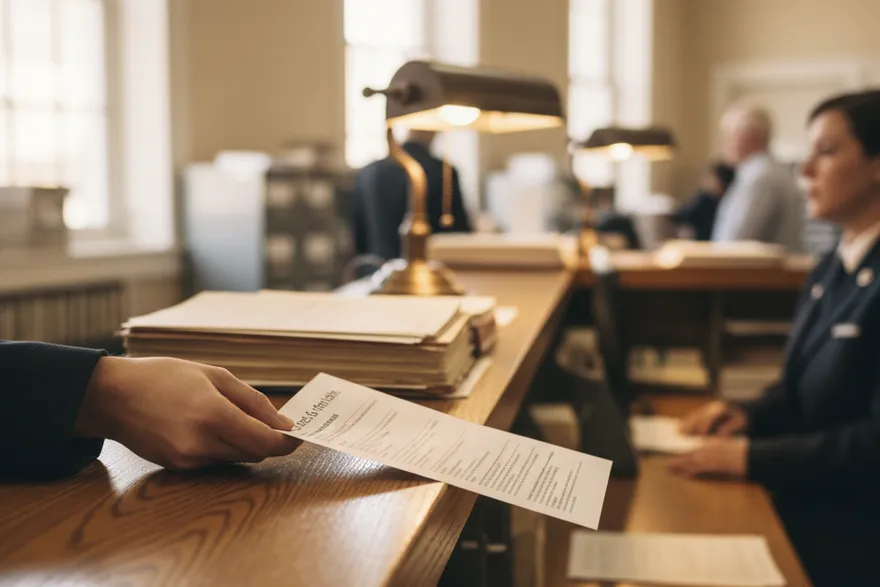
This guide covers the filing itself: who to contact, what to send and which deadline to beat. If you are still working out whether a surplus exists or how it is calculated, start with what foreclosure surplus funds are. Either way, the money is not sent to you automatically. You have to claim it.
Step 1: Confirm there’s actually a surplus
A surplus exists only when the winning bid is higher than the total debt plus the costs of foreclosure. Add up:
- The remaining loan balance (the payoff to the foreclosing lender)
- Accrued interest, late fees, and the lender’s foreclosure/legal costs
- Any senior liens that had to be paid
Subtract that from the auction sale price. Whatever is left is the surplus. You can usually see the sale price in the trustee’s or clerk’s records, or on the county recorder’s site. If the sale barely covered the debt, there may be no surplus.
Step 2: Find who is holding the money
Who holds the surplus depends on how your state forecloses:
- Nonjudicial (trustee) states — the trustee distributes the surplus and may transfer it to the court if claims compete.
- Judicial states — the surplus is paid into the court, and you file a motion in the foreclosure case (a referee may be appointed).
- Property-tax sales — the county treasurer, tax collector, or clerk holds the overage. (This is a separate law — see tax-sale overage.)
Our State Surplus Claim Finder points you to the right office for your state.
Step 3: Find your deadline — and beat it
This is where most people lose their money. Deadlines vary by state and county:
- In California, the trustee must notify potential claimants within 30 days of executing the trustee’s deed, and your claim must reach the trustee within 30 days of that notice Civ. Code §2924j. California guide.
- In Florida, unclaimed mortgage-foreclosure surplus is reported to the state one year after the sale §45.032; tax-deed surplus claims are due 120 days after the clerk’s notice §197.582. Florida guide.
- In Texas, tax-sale excess proceeds must be claimed by petition before the 2nd anniversary of the sale Tax Code §34.04. Texas guide.
If you miss the deadline, the surplus is usually turned over to your state’s unclaimed-property program. You can often still claim escheated surplus funds there — but it’s slower and harder. Don’t wait.
Step 4: Gather your documents
Requirements vary, but you’ll typically need:
- Government-issued photo ID
- Proof you owned the property — the recorded deed, a mortgage statement, or the foreclosure case number
- The case or parcel number and the sale date
- A completed claim form or motion from the holding office
- If you’re an heir: the owner’s death certificate and proof of your right to inherit (see how heirs claim surplus funds)
Step 5: File your claim and follow up
Submit your claim to the correct office (trustee, court clerk, or treasurer), keep a copy of everything, and confirm receipt. If there are junior lienholders, the office or court will sort out priority before paying you. Follow up in writing if you don’t hear back within the timeframe they give.
Should you hire someone?
You usually don’t need to. The official claim is typically free or low-cost, and recovery companies often charge 30–50%. Consider paid help only when there are competing liens, an estate dispute, or a complex out-of-state claim — and even then, many states cap what a finder can charge. If you’d rather do it yourself, follow our free DIY guide.
Bottom line: the surplus is your money. Find who holds it, beat your deadline, and file the claim — and you keep all of it.
Common questions
How long do I have to claim surplus funds?
Can I claim surplus funds myself?
Where do I file a surplus funds claim?
What happens if I miss the deadline?
Do I need a lawyer to claim surplus funds?
This article is general information, not legal or financial advice. Foreclosure surplus and tax-sale overage laws, deadlines, and procedures vary by state and county and change over time. Always confirm the current rules with your county clerk, trustee, or treasurer, your state’s unclaimed-property office, or a licensed attorney before acting. Sources are listed on our sources page.